Chipotle Brown Rice vs White Rice Nutrition: Which Is Better?
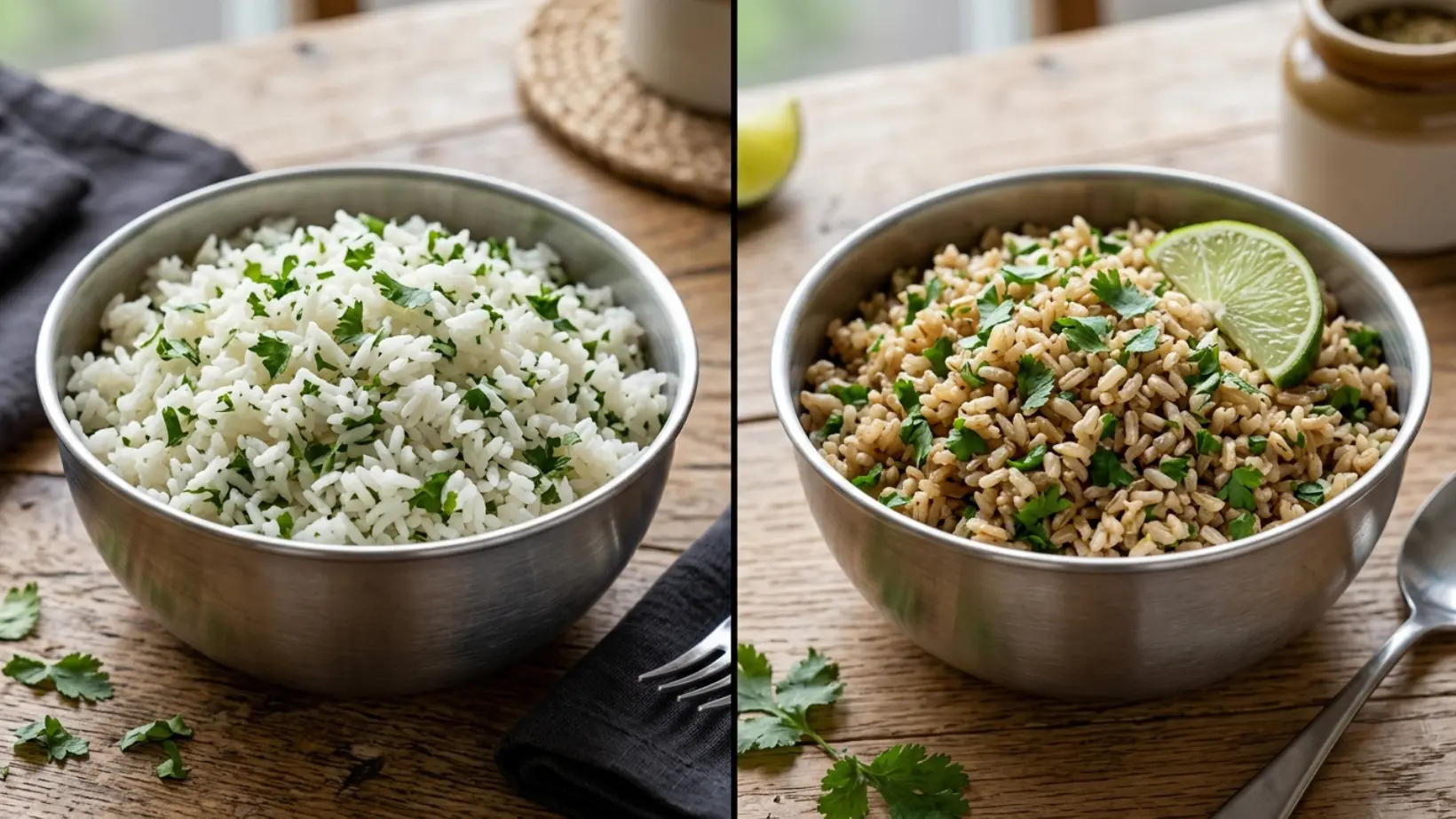
When managing your nutrition at Chipotle then by analyzing chipotle brown rice vs white rice nutrition proves that both options share an identical 210 calories count (210 kcal) per 4 oz serving, making your choice depend on fiber, micronutrients, and sodium preferences. Through years of analyzing menu macros, I have seen people assume one base magically slashes carbohydrates, but their side-by-side comparison reveals 40g total carbs for cilantro-lime white rice versus 36g for brown rice, alongside 4g protein and 4g fat (4.5g in brown, 4g in white from rice bran oil).
To calculate the exact nutrition for your entire custom order, use our free Chipotle Nutrition Calculator. Brown rice keeps its outer bran layer and germ by delivering 2g of dietary fiber, magnesium, phosphorus, B vitamins (B1, B3), and antioxidants, whereas refined long-grain white rice removes the grain hull to offer 1g fiber and 190mg to 195mg salt (sodium).
Calculate Your Chipotle Meal’s Nutrition
Make informed choices with our easy-to-use nutrition calculator.
Go to CalculatorAccording to Harvard Health, white rice has a higher glycemic index (73 versus 68 for brown), meaning it converts faster into blood sugar, causing a quick spike in glucose that athletes use for post-workout energy and glycogen replenishment while being easier to digest for people with digestive issues, IBS, Crohn’s disease, irritable bowel syndrome, or stomach illness.
Conversely, unrefined whole grain brown rice behaves differently in the bloodstream, promoting slower, sustained fullness and preventing insulin resistance, making it a smarter selection for prediabetes management, heart health, or a low-fat diets strategy.
Chipotle Brown Rice vs White Rice Nutrition (Full Comparison Table)
| Nutritional Metric | Cilantro-Lime White Rice (4 oz) | Cilantro-Lime Brown Rice (4 oz) | Winner / Note |
|---|---|---|---|
| Calories | 210 kcal | 210 kcal | Tie |
| Total Fat | 4g | 4.5g | White Rice (Slightly lower fat) |
| Total Carbs | 40g | 36g | Brown Rice (Slightly lower carbs) |
| Dietary Fiber | 1g | 2g | Brown Rice (Double the fiber) |
| Protein | 4g | 4g | Tie |
| Sodium | 195mg | 190mg | Brown Rice (Slightly lower sodium) |
Which Chipotle Rice Is Better for Weight Loss?
If your daily health goals focus on reduction of body mass, asking which chipotle rice is better for weight loss comes down to satiety rather than a calorie deficit. Since both bases contain 210 calories, neither option creates a magic weight-loss cure, but the double fiber in brown rice (2g vs 1g) helps you stay fuller longer so you don’t snack an hour later.
However, the real weight loss secret I recommend to clients is requesting a half-scoop measure, which instantly saves 105 calories without sacrificing the fresh cilantro, lime juice, lemon juice and bay leaves citrus flavor profile.
Chipotle Black Beans vs Pinto Beans Calories & Macros
Moving from the rice base to the second core component of a bowl, evaluating chipotle black beans vs pinto beans calories shows an identical base of 130 kcal and 8g protein.
Black beans provide a slight edge with 7g fiber, 1g fat, and 210mg sodium, while pinto beans contain 6g fiber, 1.5g fat, and 200mg sodium. Choosing black beans gives a slightly higher nutrient density ratio, though pinto beans offer a creamier texture that blends well in any bowl.
Which Chipotle ingredients have the most Sodium?
Analyzing chipotle sodium content comparison by ingredient reveals that your base choice barely affects overall blood pressure and water retention, as brown rice (190mg) and white rice (195mg) differ by only 5mg. Low-sodium choices under 200mg include Supergreens (15mg), extra cheese (190mg), and both rice bases.
Moderate sodium choices (200mg to 400mg) include pinto beans (200mg), black beans (210mg), carnitas (300mg), chicken (310mg), and guacamole (370mg). High-sodium traps exceeding 450mg feature queso blanco (490mg), barbacoa (530mg), and fresh tomato salsa (550mg), proving that salsa and protein choices not rice drive total salt intake.
Smart Rice Base Picks Based on Your Diet Goal
- For Low-Carb / Keto: Skip both rice options entirely and select Supergreens lettuce mix (15 kcal, 1g net carb).
- For High-Fiber Satiety: Pair brown rice with black beans to achieve 9g of combined dietary fiber.
- For Post-Workout Glycogen Replenishment: Choose white rice for faster carbohydrate absorption post-training.
For Maximum Muscle Building: Combine white rice with double chicken or steak and black beans. If your main fitness goal is hitting 50g+ protein without adding extra calories, read our step-by-step guide on how to build a high-protein Chipotle bowl for the best menu hacks.
Frequently Asked Questions (FAQ)
Q1: Does Chipotle brown rice have fewer calories than white rice?
No, both have the exact same calories of about 210 per 4 oz serving. The real difference is in fiber, sodium and glycemic index not in calories. Brown rice wins on health due to more fiber and less sodium, not fewer calories.
Q2: Why does Chipotle white rice have fat in it?
Chipotle adds rice bran oil along with cilantro and fresh lime juice, to season its white rice this gives it about 4g of fat per serving. This fat is not a bad thing, since rice bran oil is considered a healthier fat source compared to other cooking oils.
Q3: Is brown rice or white rice healthier at Chipotle?
Brown rice is the slightly healthier pick, mainly because of its 2g fiber and whole-grain micronutrients that white rice does not have. That said, the difference is not huge both are close in calories and overall nutrition. So it comes down to whether you value fiber and micronutrients (go brown) or prefer a lighter, easier-to-digest option (go white).